A chat with Alix & Déandrah.
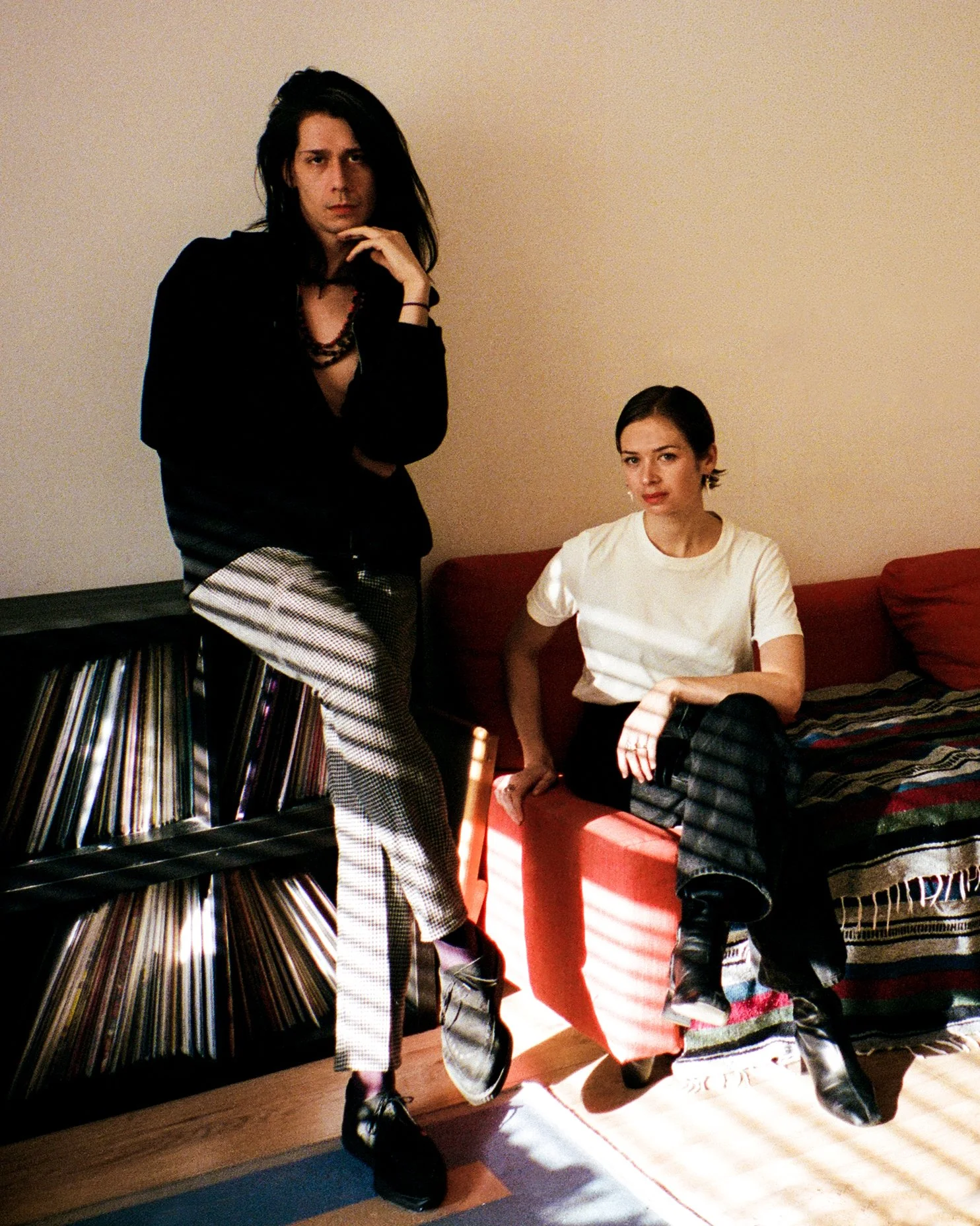
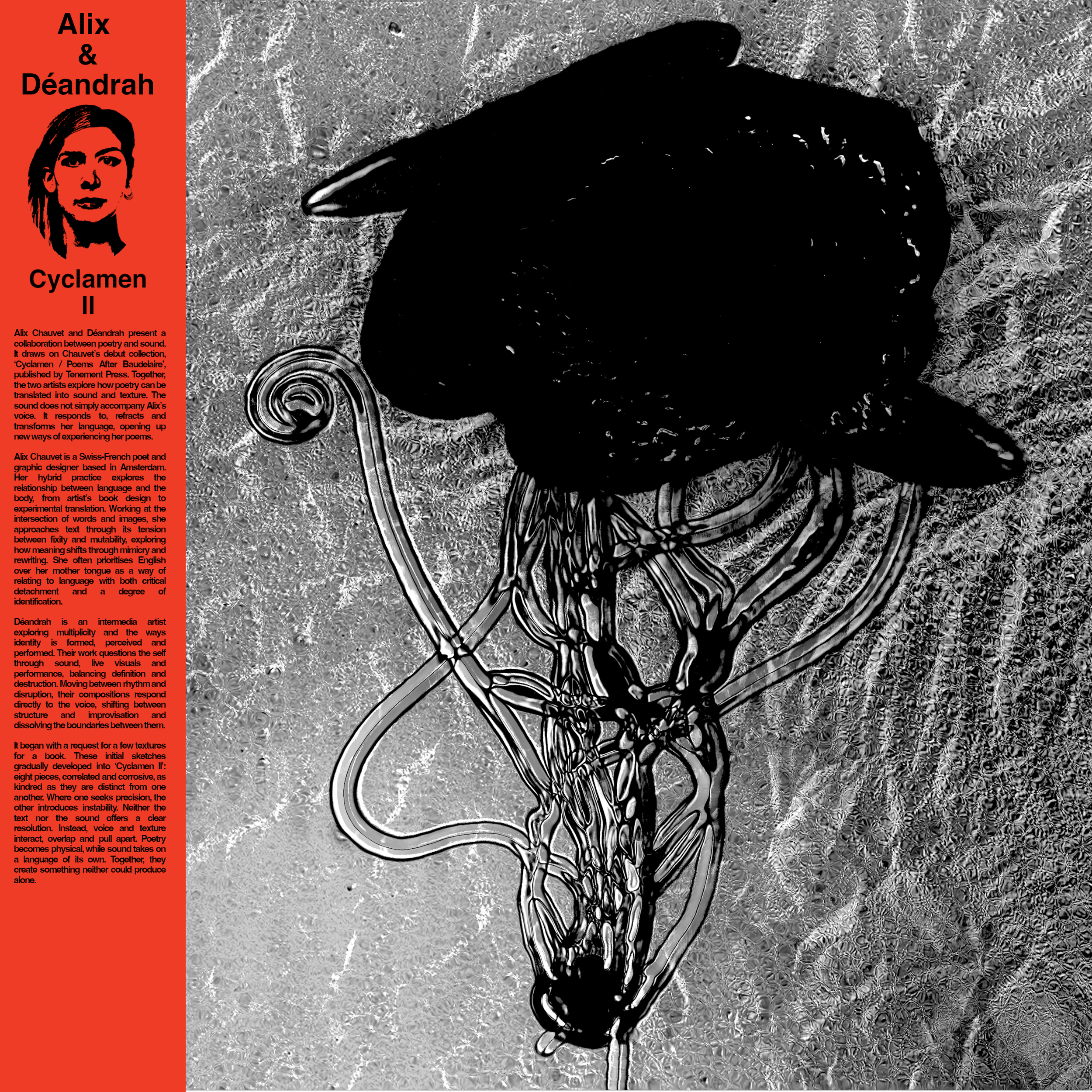
Alix Chauvet and Déandrah present a collaboration between poetry and sound. It draws on Chauvet’s debut collection, Cyclamen / Poems After Baudelaire, published by Tenement Press (2025). Together, the two artists explore how poetry can be translated into sound and texture. The sound does not simply accompany Alix’s voice. It responds to, refracts and transforms her language, opening up new ways of experiencing her poems.
Alix Chauvet is a Swiss-French poet and graphic designer based in Amsterdam. Her hybrid practice explores the relationship between language and the body, from artist’s book design to experimental translation. Working at the intersection of words and images, she approaches text through its tension between fixity and mutability, exploring how meaning shifts through mimicry and rewriting. She often prioritises English over her mother tongue as a way of relating to language with both critical detachment and a degree of identification.
Déandrah is an intermedia artist exploring multiplicity and the ways identity is formed, perceived and performed. Their work questions the self through sound, live visuals and performance, balancing definition and destruction. Moving between rhythm and disruption, their compositions respond directly to the voice, shifting between structure and improvisation and dissolving the boundaries between them.
It began with a request for a few textures for a book. These initial sketches gradually developed into ‘Cyclamen II’: eight pieces, correlated and corrosive, as kindred as they are distinct from one another. Where one seeks precision, the other introduces instability. Neither the text nor the sound offers a clear resolution. Instead, voice and texture interact, overlap and pull apart. Poetry becomes physical, while sound takes on a language of its own. Together, they create something neither could produce alone.
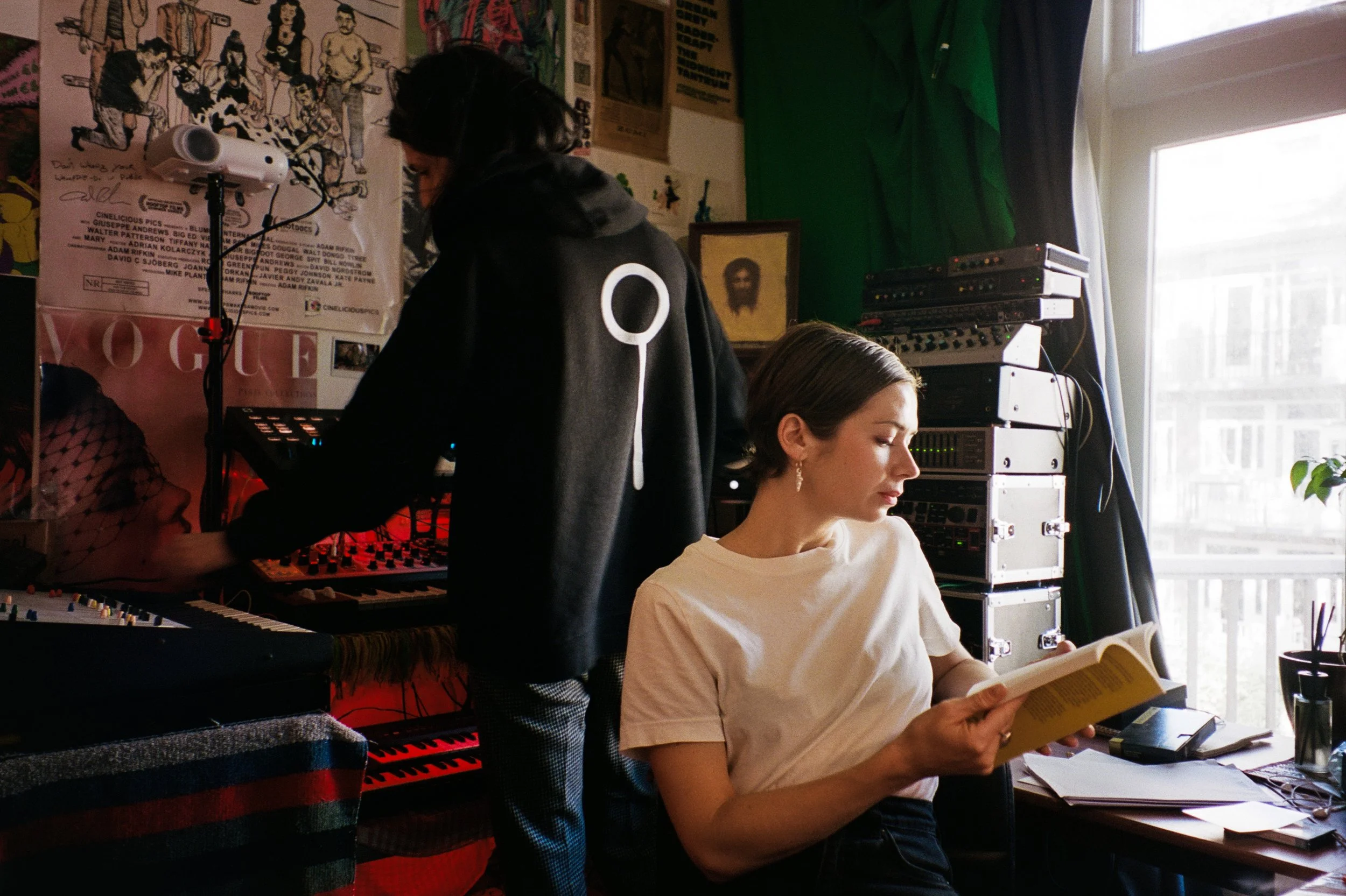
Photo by Olivia Mulready.
Photo by Olivia Mulready.
I didn't really know what I was getting myself into when I started working with Déandrah on a sonic interpretation of ‘Cyclamen’. There was something unfamiliar to me about letting someone else engage with an existing work, grasp its drive and project it beyond its original context. It was a bit as if I were letting someone do to me what I had done to Baudelaire through my unfaithful rewritings.
As a graphic designer and poet, I relate to language in two distinct yet intertwined ways, working at the intersection of text and image. My background in design leads me to treat text as a tangible material, with which I construct. At the same time, I approach poetry—and translation in particular—as a site of mutation, where meaning shifts through mimicry, refraction, and fragmentation. 'Cyclamen’ reflects my interest in forms of translation that unsettle identity and dismantle the illusion of linguistic mastery, revealing the latencies within a source text. Although I never sought to make the language of my poems absolute, I composed them meticulously. Each word was chosen in relation to the metrics and prosody of the original poems. Corseted into eight- to twelve-syllable lines, my sentences echo the original form, with meter serving as a container, like a womb. Working with Déandrah introduced a layer of chaos and intangibility into these structures. Repeated takes, fleeting moments of grace, and failures alike allowed us to explore both the infinity of possibilities and the exacting demands of rhythm, searching for a fragile balance between comfort and unease.
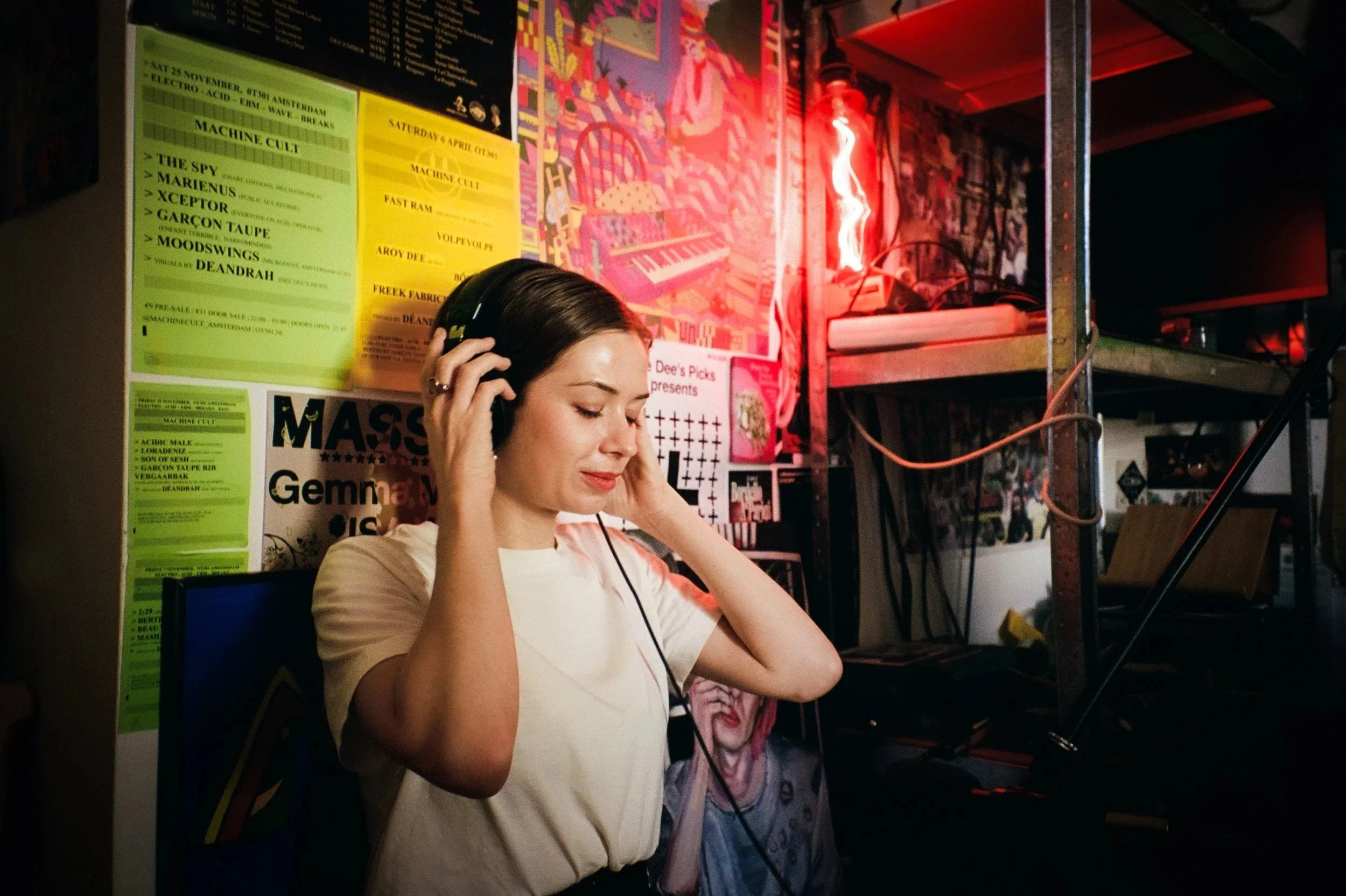
Photo by Olivia Mulready.
I was interested in exploring how soundscapes could function as a form of intersemiotic translation, with sound operating as a language in its own right. The field recordings in Hornet Pit, for instance, and the distorted object sounds in Opprobrium and Concretion are not merely ornamental: they become vectors of meaning, supports for it, ‘living pillars’. They evoke Baudelaire’s correspondences while simultaneously rupturing its Romantic sensibility through contemporary textures. These sounds embrace translation’s capacity for distortion: amplifying, muting, and reshaping voices, moving away from literal equivalence towards echoes, extensions, and alterations. This has enabled us to revisit the theme of decay that runs through my work, and to explore it through layers of sound that both complement and provide a counterpoint to my poems.
Working with sound brought otherness to the very heart of the project. My voice is often inflected to the point of becoming unrecognisable. I wanted to approach this alterity as a source of expansion rather than a threat. To betray myself a little, too, while remaining close to my center and to my own body, making room for surprise and apprehension.The experience opens up a space between familiarity and estrangement, where the body becomes both the source of the work and the site of its transformation.
This collaboration with Déandrah has enabled me to reclaim language beyond writing, through my voice, no longer using the body merely as a metaphor for a container, but experiencing the work physically, literally in my flesh.
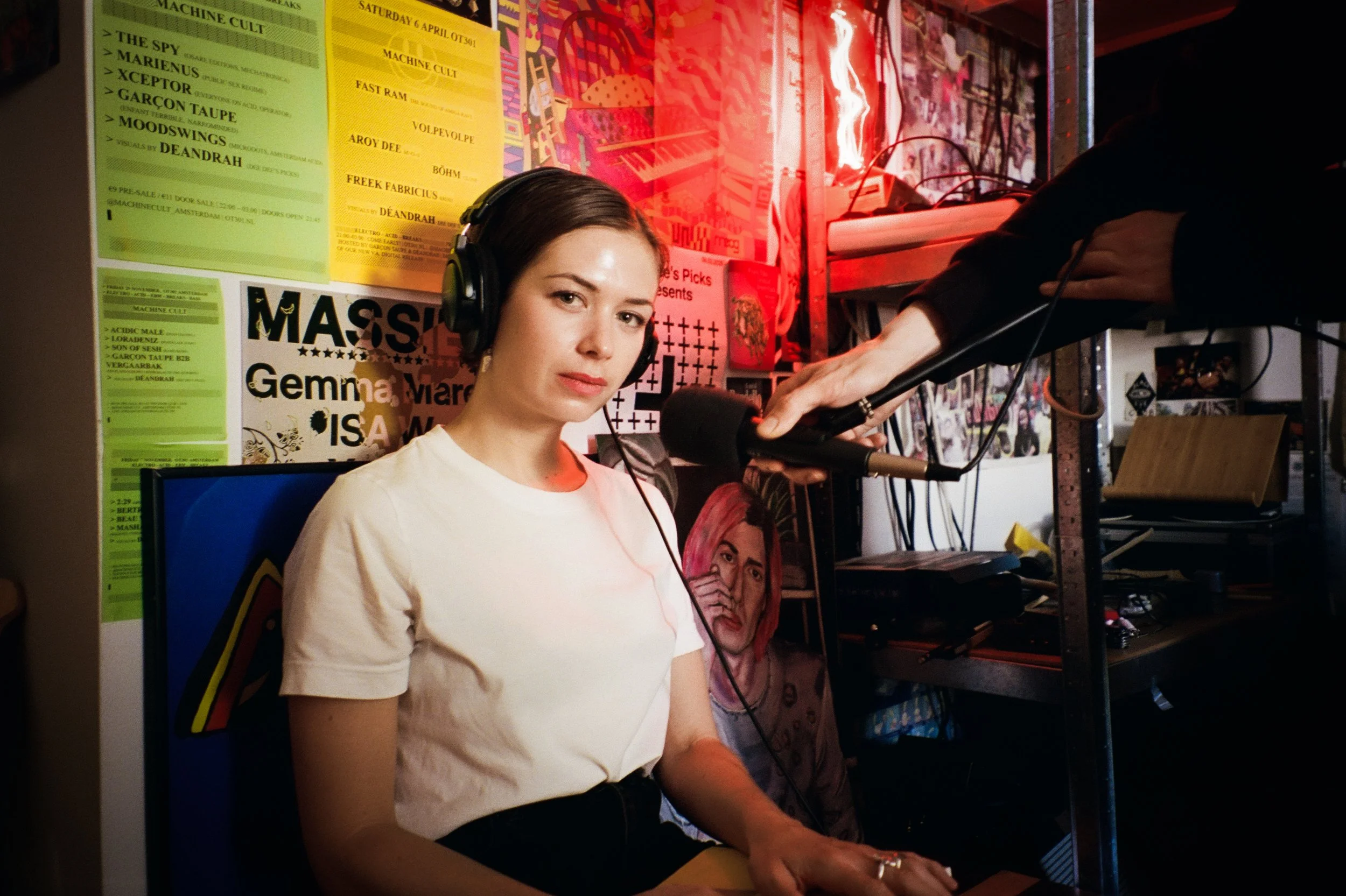
Photo by Olivia Mulready.
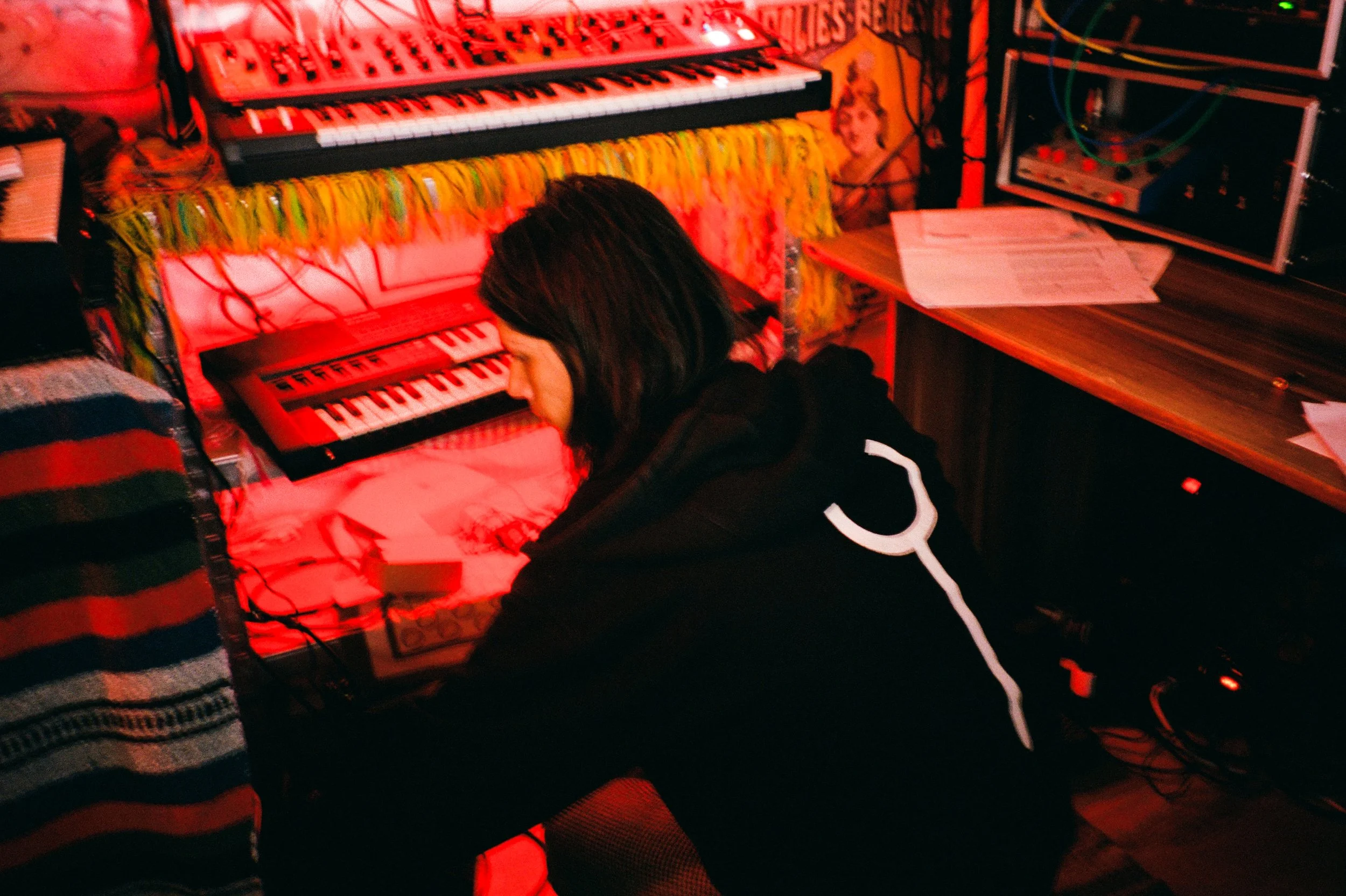
Photo by Olivia Mulready.
For years I have worked alone, and I know how I get. I take hold of a project and, without quite meaning to, make it my own. This is the first time since my days in bands that I have shared the making of anything, so I'll admit there was some nervousness at first.
The poems were already there. Cyclamen / Poems After Baudelaire had been written a year before a single sound existed, complete in itself. The idea was simple: me the audio, her the texts. At first it felt like more her project than mine, with me setting the foundation for it to stand on. Somewhere along the way, it became ours.
We did not share a language, not really. Alix knows precisely what moves her, but she does not carry the words I have gathered over years of turning knobs and naming frequencies, and so those words became useless. We met in the gap, in a Frenglish neither of us would admit to in public. She often writes in English to hold her mother tongue at a distance. I found myself doing something similar, stepping away from my own vocabulary and rethinking how I communicate, until we found words we could both understand.
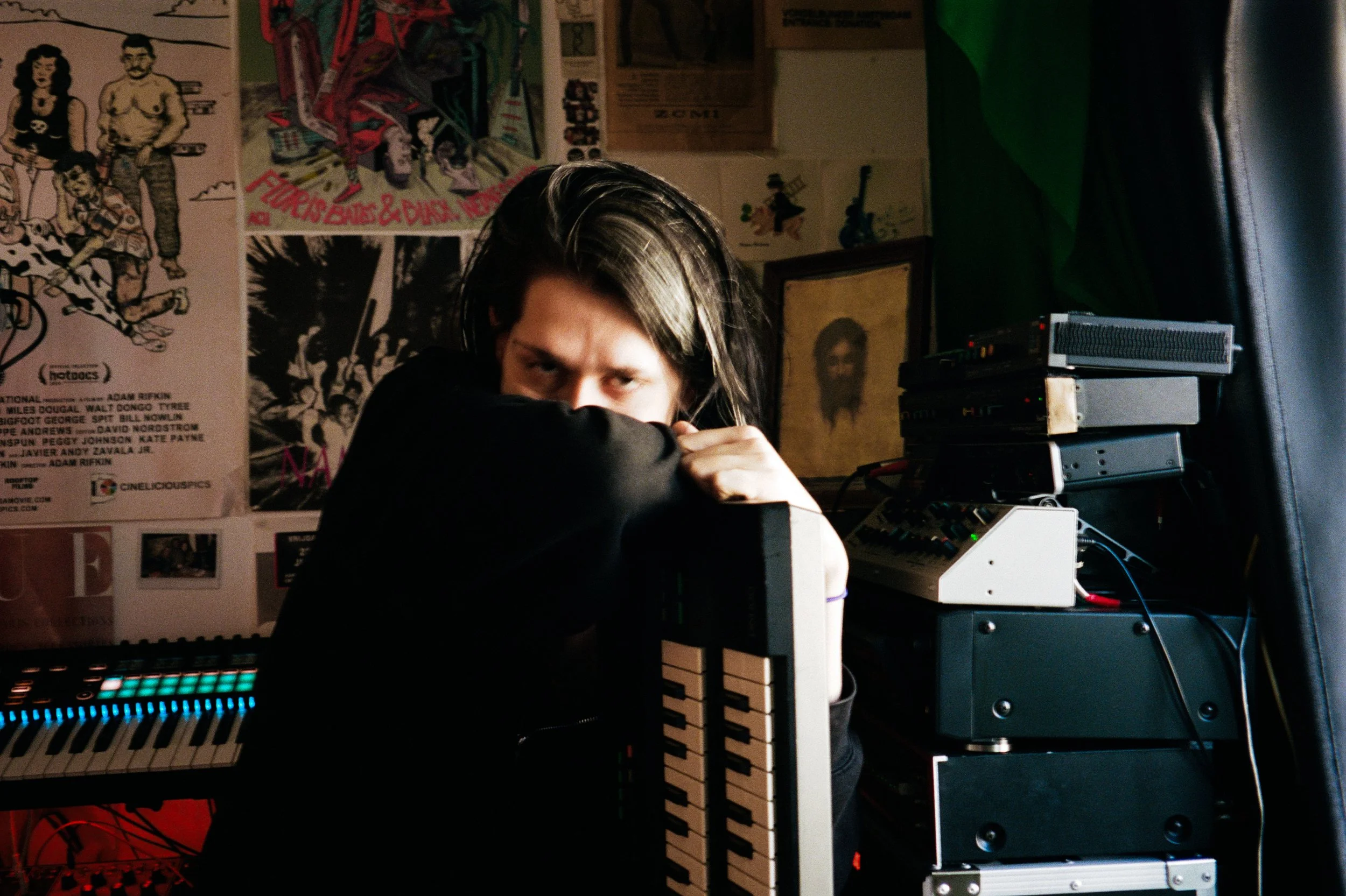
Photo by Olivia Mulready.
There were moments of losing my footing. I had to know when to let go, and when to lead. I would build something, we would agree on it, and then her voice would enter and I would realise I had been composing for myself, as though I had forgotten someone else had to live inside it. So I would take it apart. In total, I think I composed fifteen skeleton tracks, and only eight were given flesh and made the final cut. It pulled me out of my own habits. She trusted me entirely with the direction, and there is a particular weight in being trusted like that.
Perhaps because the collaboration had already stripped something away, I wanted the recording to be naked too. Nothing was played to a metronome. Every rhythm on this record breathes a little, drifts and catches itself, and much of that comes from the machines: old, imperfect, and left that way. Among the equipment that we used, there is an eighties delay, the Ibanez DD200, that most people dismiss as noise, and they are kind of right. Like a tape echo, it lets you switch between ‘tape heads’ to spread the repeats further apart, except it's all digital, and every switch lets out this loud, clunky racket. On ‘Lustre’ it sounds almost like shackles being dragged across a floor. There is a spring reverb, the Knas Moisturizer, that I struck by hand and fed back into itself until it formed a haunting bed of rattles and hum underneath ‘Opprobrium’. And there is the Korg KP3 my dad bought me as a present for graduating from high school, which I have tried to sell more than once and never could. It runs all through ‘Postlude’, where I used its crossfading samples algorithm on Alix's vocals, mutating them into one another, stretching and smearing whatever my finger touched on its X/Y pad. Early 2000s artefacts intact. I’m glad that some objects refuse to leave you. I am learning to stop asking why. Other sounds were meant to let go of where they came from. Alix's recordings from Geneva, of insects, lakes and open fields, were recorded on cassette loops and ran through a Tascam Portastudio 414, sampled and resampled until the place itself dissolved. What remains of it ended in ‘Hornet Pit’: a landscape that once existed, brought to desolation and rebuilt into something new.
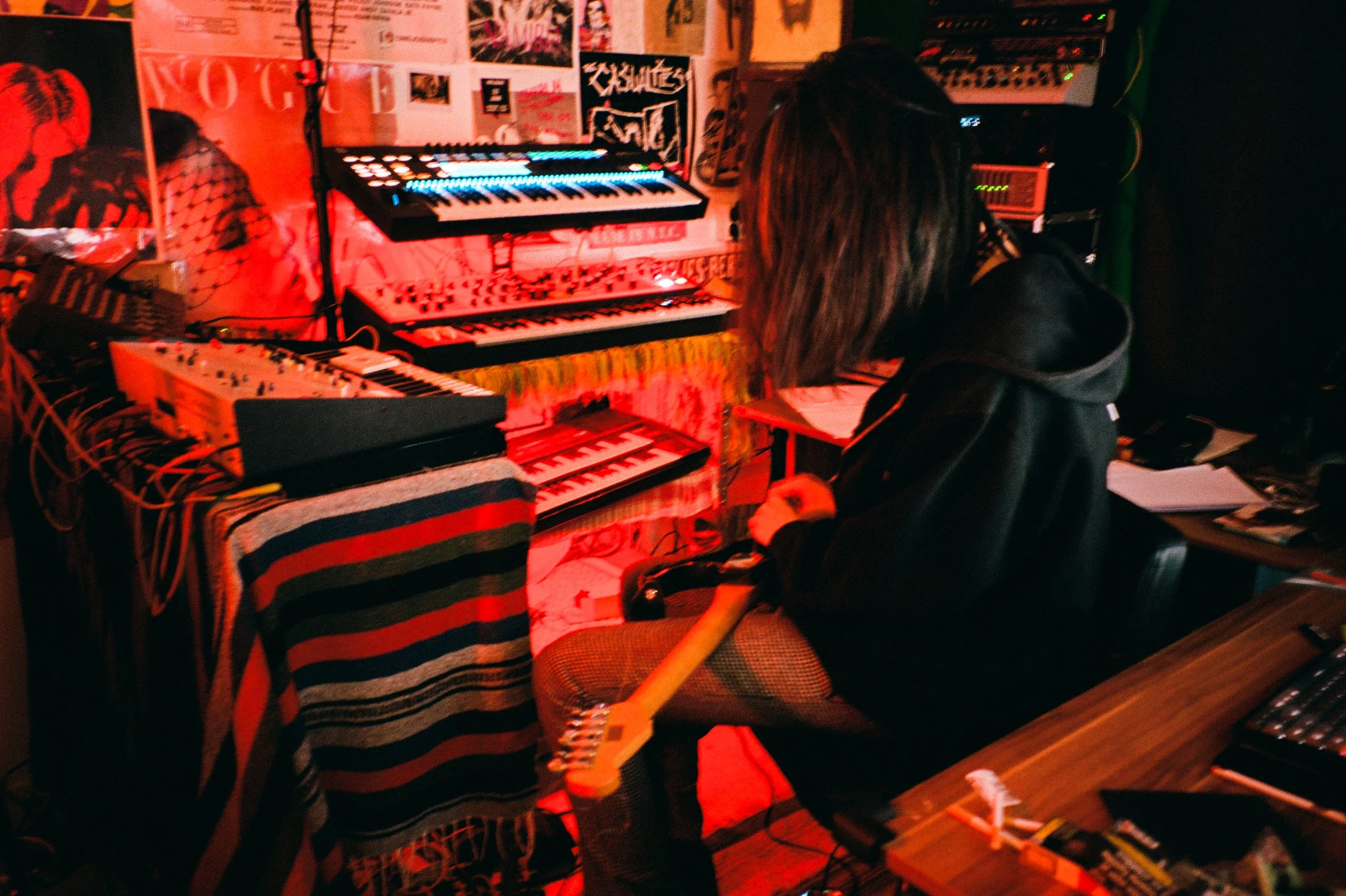
Photo by Olivia Mulready.
Recording it all live means the record still feels awkward to me in places, uncertain of what comes next. I have made peace with that. That uneasy anticipation is what gives it a face of its own. It is a frail kind of uncertainty, and as much as I would rather not admit it, it lives in me too. To find it in my music, and to find it there beside someone else, is quite wonderful.
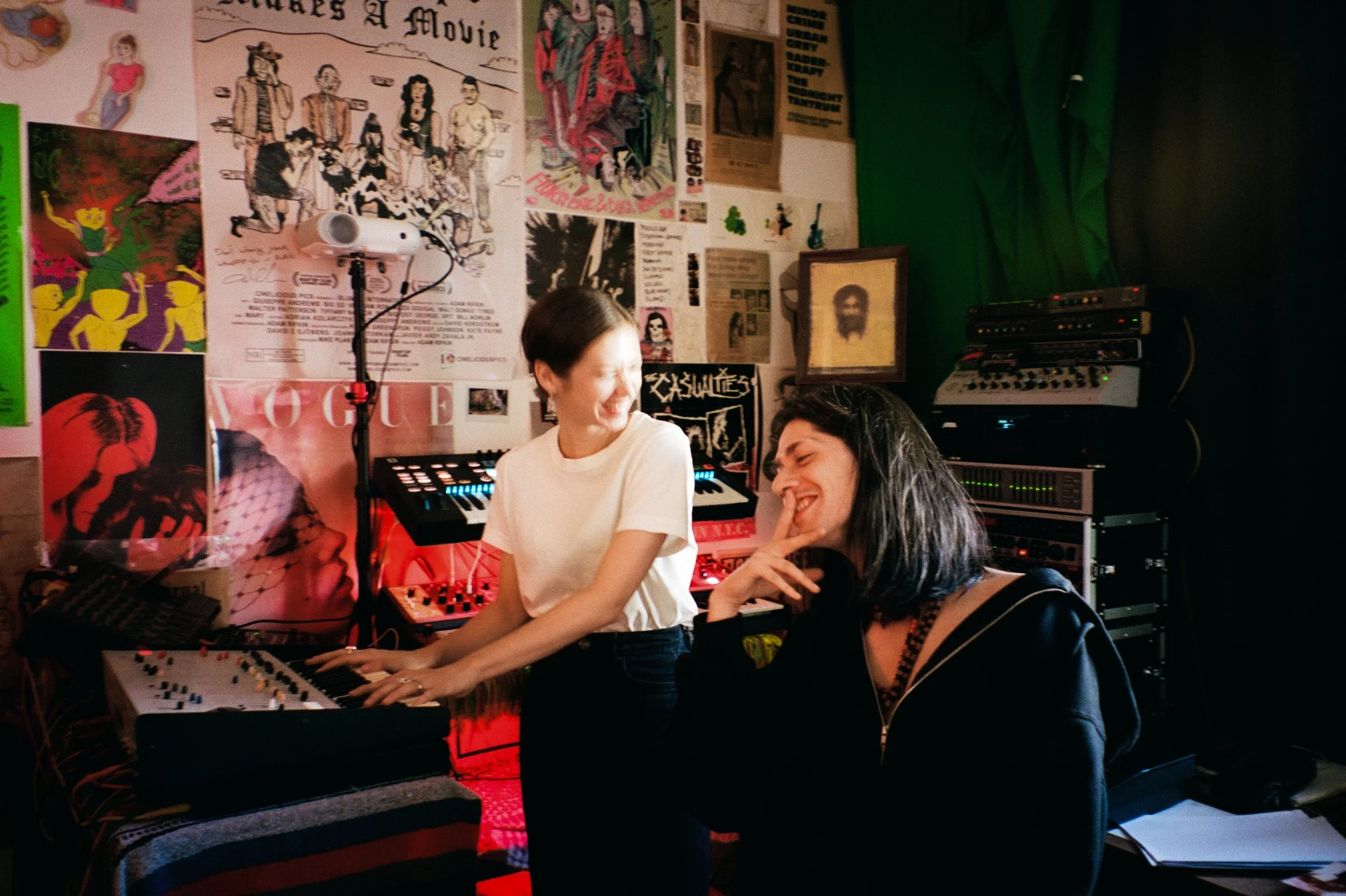
Photo by Olivia Mulready.
Stay up to date and get in touch with Alix Chauvet & Déandrah.